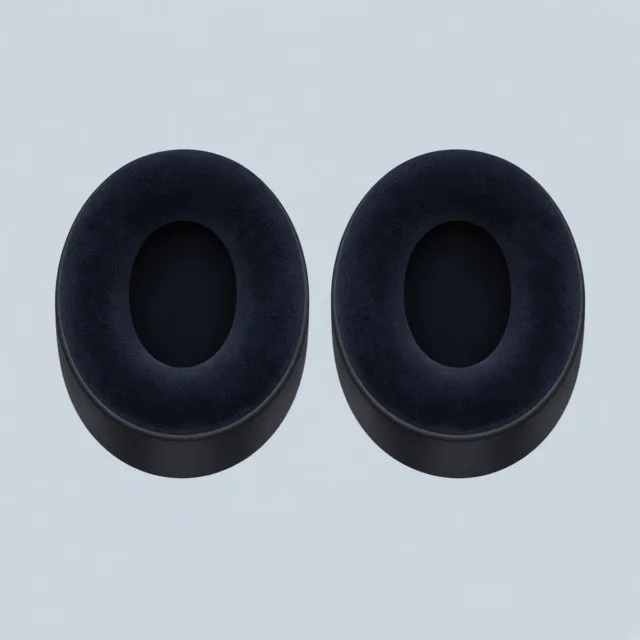
When to Replace Headphone Ear Pads: 7 Signs They’re Worn Out
When to replace ear pads is a condition check, not a date on the calendar. The cover peels or goes sticky, the foam stays flat, the seal leaks, a smell survives a wipe, your ears hurt in a pair that used to feel fine, or the cushion sheds crumbs. Any one of those signs means you have worn out ear pads. You do not need the full list.
Light creasing can stay. A pad that still springs back, still seals, and does not smell like a gym bag is fine. Trouble starts when the cushion quits and you give it one more month anyway.
Protein leather and pleather, coated covers that only look like leather, usually fail first. Daily wear often shows flaking around two or three years. That comes from owners comparing notes, not from a lab. Sweat, skin oil, and a hot car move it. A weekend-only pair can look decent longer.
A one-minute check
Take the headphones off in daylight. Look at both cups, then press the foam and let go.
- The cover is cracked, flaking, or sticky
- A thumb dent stays in the foam
- You can find a gap along your jaw or behind your ear
- The smell is still there after a dry wipe
- Your ears ache in pads you used to wear for hours
- Black or gray crumbs end up on your skin, or the foam is showing
One of those is enough to replace the pair. Match the mount before you pay, or the new cushion comes back as a return.
| Sign | What you see or hear | Replace now or wait |
|---|---|---|
| Cracking or flaking cover | Coating lifts and sheds on your ear | Now. Springy foam does not save it. |
| Sticky surface | Your finger drags, but the pad still looks whole | Now. That tack is the coating failing. |
| Flat foam | The thumb dent stays, or the pad looks thinner | Now. It will not puff back up. |
| Loose seal | A gap at the jaw, thinner bass, more room noise | Now, if the gap showed up with age. |
| Smell after a wipe | Odor remains after a dry wipe and a night of air | Now. It is in the foam. |
| Sore ears on an old pair | Pads you used to wear for hours now hurt | Now, if the ache came with age. Day-one pain is separate. |
| Crumbs or foam showing | Specks on your cheek, or foam through a hole | Now. Tape and glue flex off. |
The cover is cracking, peeling, or flaking
Peeling ear pads shed. It often starts as a hairline on the inner lip, where the pad rubs your ear, or on the outer seam against the cup. The coating lifts in little sheets and sticks to your cheek, your glasses, and a dark shirt. The cover is done even if a squeeze still feels bouncy.
In a Reddit thread from fall 2024, people with protein leather pads called this ordinary wear after a few years of daily use. Flakes left black specks on their skin until they swapped the cushions. One person replaces pads about every two years so they never live with that stage. Another wipes the new set with a microfiber cloth after listening, so sweat and oil are not sitting on the cover overnight.
Protein leather on Sony headphones often splits at that same edge. If that is the pair on your desk, start with pads for that Sony model and match the mount to the cups you already have. A cushion from a different Sony line is a different part.
The surface went sticky before it peeled off
Sticky is easy to miss. The pad still looks mostly whole, then your finger drags. The coating is breaking down. Big flakes may be a month away, or already hiding in a crease.
A dry cloth takes off dust. It will not turn a tacky pad smooth again. Alcohol, baby oil, and leather conditioner get suggested together, and they contradict each other. On protein leather that has gone soft, oil can smear the coating instead of saving it. If the pad is still tacky the next day, replace both cups. The smooth side is usually next.
The foam stays flat and will not spring back
Press the middle of the pad with your thumb and let go. Healthy foam comes back in a second or two. Worn foam holds the dent. Sometimes the whole ring is just shorter than the day you unboxed the headphones.
Your ear sits closer to the driver, and a gap opens around the seal. The cover can look clean the entire time. A little softening in the first months is different. Some people like that stage, because the pad took the shape of their head and still rebounds. The line is the dent that stays, or foam that went stiff and started to hurt. You cannot massage it back to the old height.
The seal opened up and the fit got worse
A seal is the pad touching your head all the way around. When it opens, the room comes back and the bass thins out. The low end was using that closed pocket of air. More volume will not close the gap.
The surface can be smooth and still finished. Slide a finger along the pad at your jaw, then behind the ear. A gap, or a cup that rocks when you chew, means the fit has gone. If that started after the foam got thin, the pad is the reason. If the headphones never sealed, an identical pad may not match your head.
A taller pad can close a leak and also push the driver farther from your ear, which changes the sound. Stay close to the original thickness if you liked the old balance.
The smell is still there after a wipe
Sweat and skin oil soak into the foam. A careful person can still end up with rank pads. Dust wipes off. A smell inside the cushion does not.
Wipe both pads with a dry cloth and leave the headphones in open air overnight. If they still smell in the morning, replacement ear pads are the clean fix. Soaking the cups to save the old pair is how drivers get wet.
Some velour and fabric pads can come off for a gentle wash. Dry them all the way through before they go back on. Protein leather that smells from the inside is usually finished. A gym smell that wipes off can wait. A smell in the foam, next to a crumbling cover, should not.
Your ears hurt in pads that used to be fine
New headphones can clamp hard for a week or two while the headband relaxes. That pain often fades. It is not wear.
Wear is a pair you used for calls and long albums without noticing, until you could not. Stiff foam and a tired cover do this before the outside looks destroyed. Hot spots on the ridge of your ear, or the driver resting on you, usually mean the cushion got too thin.
On Reddit in June 2025, someone had used one gifted pair as their main headphones at home for about ten years. Their ears finally hurt enough that they looked up whether the pads could be replaced. People who saw the old cushions called them deflated. After the new pads went on, the pain stopped, and the music sounded better.
Pain on the first afternoon is different. A hard clamp, shallow cups, or glasses on a stiff cover will not be fixed by the same pad.
Black crumbs on your skin, or foam showing through
This is peeling at the end. Black or gray specks show up on your cheek, or a hole opens and the foam crumbles when you pinch it. Glue and tape hold until you put the headphones on again. Then the edge lifts.
A Marshall owner posted in 2026 that the fake leather on two pairs had peeled after a few years. Everything else still worked, and the headphones had been looked after. The replies were blunt. Oily skin and sweat speed it up, and replacing this kind of cover every couple of years is normal. Care slows the start. It does not cancel the material.
Wipe the cup where the pad seats before the new ones go on. Loose flakes under a fresh cushion feel like grit, and grit wears the new cover from the inside.
Which pair to buy
Buy one replacement pair for both cups. A fresh cushion next to a dead one sits uneven, and you feel the old side every time you put the headphones on.
Check four things against the headphones in front of you, not against a memory of them. Width and height. The inner opening around your ear. Thickness. The mount. A clip ring, a slip-on sleeve, and a glue-on cushion are different parts even when the diameter is close.
Material comes after those four. On a Sennheiser forum, a Momentum owner had already replaced cracked, flat stock cushions twice before trying a different material. Change the material only after the mount is right.
You do not need all seven signs. Peeling with springy foam is enough. Flat foam under a clean cover is enough. A smell that a wipe will not touch is enough.
Get the pair that fits the headphones you already like. The mount matters more than a nice photo on the listing. Leave the new-headphone search alone unless the drivers, the cable, or the hinges are actually broken.